Launch Monitor Accuracy Chart
Launch monitor accuracy chart ranking popular units by tier, from entry radar to commercial camera systems, with what drives accuracy: radar vs camera, measured vs estimated.
Launch monitor accuracy rises in clear tiers, and the two things that drive it are the technology (radar versus camera) and whether key data like spin and club path is measured directly or estimated. At the top, commercial systems like Trackman and the Foresight GCQuad set the benchmark and cost five figures. In the middle, prosumer units like SkyTrak Plus, Bushnell Launch Pro, and FlightScope Mevo Plus deliver strong accuracy for serious home use. At the entry level, the Garmin R10 and Rapsodo MLM2PRO give real, useful numbers with more estimation. The chart below sorts the popular units into honest accuracy tiers.
Shop these launch monitors
The buyable units across the accuracy tiers, from entry radar to a prosumer hybrid.
-
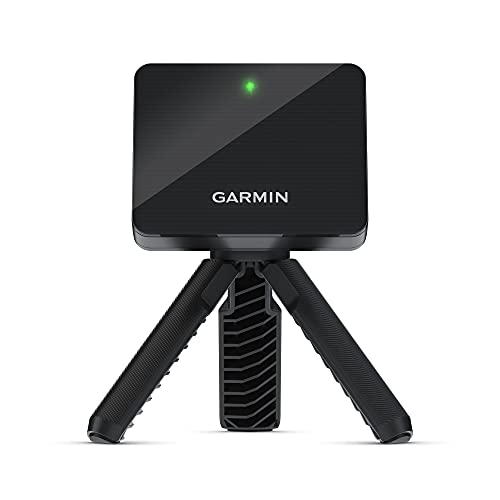 Entry Tier Garmin Approach R10 Portable Golf Launch Monitor
Entry radar that measures ball speed and launch and estimates spin, plenty accurate for practice trends and casual sim play.
-
 Entry Tier Rapsodo MLM2PRO Launch Monitor and Simulator
Adds a dual camera to its radar so it measures spin directly rather than estimating, a step up in entry-tier accuracy.
-
 Prosumer Tier SkyTrak SkyTrak+ Launch Monitor
Photometric unit with radar assist that measures ball and added club data at impact for prosumer-grade accuracy in tight rooms.
Prices update on Amazon and change often. As an Amazon Associate we earn from qualifying purchases at no extra cost to you.
Launch monitor accuracy chart
These tiers reflect published specs, technology, and owner consensus, not in-person testing. Accuracy varies with setup and lighting, so treat the tiers as general guidance.
| Tier | Example units | Technology | What drives the accuracy | Best for |
|---|---|---|---|---|
| Entry | Garmin Approach R10, Rapsodo MLM2PRO | Radar, plus dual camera on the Rapsodo | Measures ball speed and launch; spin often estimated from ball data | Practice, trends, casual simulator play on a budget |
| Mid | FlightScope Mevo Plus | Radar (doppler) | Measures a fuller data set directly; benefits from ball flight room | Serious home practice and on-screen play |
| Prosumer | SkyTrak Plus, Bushnell Launch Pro | Photometric (camera), with radar assist on SkyTrak Plus | Measures ball and added club data directly at impact; wants good lighting | Demanding home users, light clubfitting |
| Commercial | Foresight GCQuad, Trackman | Quad camera (GCQuad), dual radar (Trackman) | Measures the most parameters directly with the highest precision | Clubfitting, teaching, tour and broadcast, paid facilities |
What actually drives accuracy
Radar versus camera
Radar (doppler) units track the ball in flight, so indoors they rely on a clear view of the ball leaving the clubface and benefit from depth in the room. Photometric (camera) units capture the moment of impact beside the ball, which lets high-end systems measure spin and club data directly and excel in tight indoor rooms when the lighting is good. Neither technology is automatically more accurate, but how well each is implemented, and how much it measures rather than estimates, separates the tiers.
Measured versus estimated data
This is the dividing line that matters most for accuracy. The most precise systems physically measure spin, spin axis, and club delivery at impact. Many budget units, by contrast, estimate spin from the ball speed and launch angle they do measure, which is good enough to show trends but introduces variance on individual shots. When you read a spec sheet, look for which parameters are measured and which are calculated, because that tells you far more than a headline accuracy claim.
How to read the tiers honestly
The jump from entry to commercial is real, but so are the diminishing returns. Going from a Garmin R10 to a Mevo Plus or SkyTrak Plus buys meaningfully more reliable spin and club data. Going from a prosumer unit to a GCQuad or Trackman buys precision that mostly matters for clubfitting, teaching, and paid use. For home practice, course play, and improvement, a prosumer or even entry unit is plenty, and the money saved is better spent on a quality screen, projector, and enclosure.
Be wary of headline accuracy percentages without context. Real-world accuracy depends on consistent setup, good lighting for camera units, ball flight room for radar units, marked balls where required, and the specific shot. A well-configured entry unit can outperform a poorly set up prosumer one. For the full picks and write-ups, see our best launch monitors roundup, and for a direct top-tier comparison read Foresight vs Trackman.
Match accuracy to your goal
Decide what you need the data for before you spend. If you want to enjoy simulator golf, track general trends, and practice tempo and contact, the entry or mid tier is enough. If you are chasing precise gapping or doing light clubfitting at home, step up to the prosumer tier. Only commit to commercial-grade accuracy if you fit clubs, teach, or run a paying facility. To compare full specs side by side, see our launch monitor comparison chart.
A note on these rankings
We did not test these units in person. The tiers above are based on published manufacturer specifications, the underlying radar or camera technology, whether key data is measured or estimated, and the broad consensus of verified owner reviews and the golf community. Accuracy genuinely varies with room, lighting, and setup, so use these tiers as honest general guidance and confirm a unit's current specifications and capabilities directly with the manufacturer before you buy.
Golf Sim Build Planner
Room-fit worksheet, gear checklist, budget tracker, and wiring and lighting plan, in one printable planner that takes your build from idea to first swing.
Frequently Asked Questions
Which launch monitor is the most accurate?
Commercial-grade systems like Trackman (dual radar) and Foresight GCQuad (quad camera) are widely regarded as the accuracy benchmarks, which is why tour players, broadcasters, and professional clubfitters use them. They measure more parameters directly rather than estimating them, and they cost well into five figures. For home use, prosumer units like SkyTrak Plus, Bushnell Launch Pro, and FlightScope Mevo Plus deliver strong accuracy at a fraction of the price, which is enough for the vast majority of golfers.
What makes one launch monitor more accurate than another?
Two things matter most: the technology and whether data is measured or calculated. Photometric (camera) systems with multiple high-speed cameras tend to measure spin and club data directly, while many budget radar units estimate spin from ball speed and launch, which introduces more variance. More cameras, dual radar, and direct measurement of more parameters generally mean higher accuracy. Lighting, ball markings, and consistent setup also affect real-world results, especially for camera-based units indoors.
Are budget launch monitors accurate enough for practice?
For most practice and casual simulator play, yes. Units like the Garmin R10 and Rapsodo MLM2PRO give real, useful ball speed, launch, and distance numbers that help you see trends, work on tempo, and enjoy on-screen golf. The tradeoff is that estimated spin and occasional outlier readings make them less reliable for precise clubfitting or chasing tiny gaps in performance. Set expectations to general trends rather than tour-level precision and they deliver real value.
Is radar or camera more accurate indoors?
It depends on the implementation and the room. High-end photometric (camera) systems like the GCQuad are prized for indoor precision because they measure impact directly beside the ball and do not need ball flight room. Radar units want depth to track the ball, which can be limited indoors, though premium radar like Trackman is engineered to handle it. Budget radar units indoors lean more on estimation. In tight rooms, a quality camera unit is often the more accurate indoor choice.
Do I need commercial accuracy for a home simulator?
Almost certainly not. Commercial systems are built for clubfitting, teaching, and tour-level analysis where tiny differences matter and the cost is justified by the business. For home practice, course play, and improvement, a prosumer unit gives accuracy that is more than enough to train effectively and enjoy realistic simulator golf. Spend the savings on a better screen, projector, and enclosure. Buy commercial-grade only if you fit clubs or run a paid facility.
Are these accuracy tiers based on testing?
No. We did not test these units in person. The tiers reflect published manufacturer specifications, the underlying technology, whether key data is measured or estimated, and the broad consensus of verified owner reviews and the wider golf community. Accuracy varies with setup, lighting, and the specific shot, so treat the tiers as general guidance rather than precise rankings, and confirm a unit's current specifications with the manufacturer before buying.
Building a golf sim?
Use our free calculators and guides to size the room, the gear, and the budget.
Build Planner: $39