Best Golf Simulators for Small Rooms (2026)
The best golf simulators for small rooms in 2026: forgiving photometric and pocket launch monitors for low ceilings and tight depth, plus low-profile setup tips.
The best golf simulator for a small room is a forgiving launch monitor that does not demand much depth behind the ball. For genuinely tight spaces, a photometric unit like the SkyTrak+ or Bushnell Launch Pro reads impact off the clubface and needs only a short run to the screen, which is exactly what shallow rooms want. On a budget, the Garmin Approach R10 still performs well if you allow a few feet of ball flight, and pocket monitors like the PRGR HS 130-A tuck into the smallest setups. Here are six real options plus how to lay out a low-profile build.
Best Small-Room Golf Simulators for 2026

SkyTrak SkyTrak+ Launch Monitor
Photometric (camera) unit that sits beside the ball and reads impact, so it needs far less downrange depth than a radar in a tight room.

Bushnell Launch Pro Launch Monitor
Premium photometric monitor with tour-grade accuracy from a small footprint; reads the ball off the face, ideal when room depth is the limiting factor.
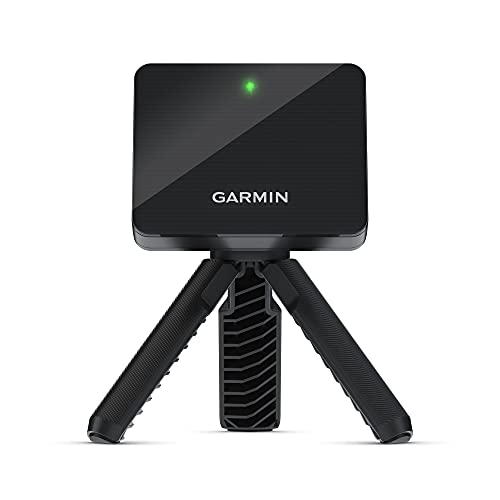
Garmin Approach R10 Portable Launch Monitor
Budget radar that works in compact spaces if you allow a few feet of ball flight; up to 10 hours of battery and a portable, low-profile body.

Rapsodo MLM2PRO Launch Monitor
Combines camera and radar with shot video and includes practice software; a strong middle option when you have limited depth but want rich feedback.

Voice Caddie SC200Plus Portable Launch Monitor
Pocket-sized monitor with a 12-hour battery and audible readouts; tiny footprint suits a small room, though as a doppler unit it still wants some ball flight.

PRGR HS 130-A Portable Launch Monitor
The simplest, smallest doppler unit: no app required, runs on AAA batteries, and gives club and ball speed plus carry from a stand behind the ball.
In a small room, your two real constraints are ceiling height and depth. Ceiling height decides whether you can take a full swing at all, while depth decides which kind of launch monitor will read your shots accurately. Get those two right and almost any of the units below will give you a satisfying setup. Get them wrong and even an expensive monitor will frustrate you. Before you spend anything, measure your space honestly and check it against our golf sim room size calculator and our ceiling height guide.
Quick comparison
| Monitor | Type | Best for | Price |
|---|---|---|---|
| SkyTrak+ | Photometric | Tight depth, accurate data | Check price |
| Bushnell Launch Pro | Photometric | Premium accuracy, small footprint | Check price |
| Garmin Approach R10 | Radar | Best budget, portable | $399.98 |
| Rapsodo MLM2PRO | Camera + radar | Rich feedback and video | $599.98 |
| Voice Caddie SC200Plus | Doppler | Pocket size, long battery | $234.99 |
| PRGR HS 130-A | Doppler | Smallest, simplest | $199.99 |
Prices on Amazon move around, so treat these as a snapshot, and premium photometric units are often sold through golf retailers rather than Amazon. Match the monitor type to your room shape first, then worry about features.
Why photometric wins in shallow rooms
A photometric monitor uses high-speed cameras to capture the ball and club at impact. Because it measures the launch itself, it sits to the side of the hitting area and needs only a short distance to a screen, often as little as 8 to 10 feet of total depth. That makes the SkyTrak+ and Bushnell Launch Pro the natural heroes for a small room. The Launch Pro carries a tour-grade reputation for accuracy, while the SkyTrak+ adds dual radar-assisted tracking and pairs with popular software. Neither is the cheapest path, but if depth is your hard limit, they solve the problem cleanly.
Radar units that still fit
Radar monitors track the ball as it flies, so they prefer a few feet of travel to gather a full read. That does not rule them out of a small room, it just means you point them into a screen or net and accept that very shallow spaces will pull down accuracy. The Garmin Approach R10 is the budget radar darling: portable, long battery life, and genuinely useful data for the money. The Rapsodo MLM2PRO blends a camera and radar with automatic shot video, which is a treat for self-coaching even in a compact bay.
Pocket monitors for the smallest builds
If your room is tiny or you want a unit you can stash on a shelf, the Voice Caddie SC200Plus and PRGR HS 130-A are about as compact as launch monitors get. They are doppler-based, so they shine for speed training and quick distance feedback rather than full simulator graphics. The PRGR runs on AAA batteries with no app at all, and the SC200Plus calls out your numbers aloud and lasts up to 12 hours. Be realistic about the data depth here, but for a small practice nook they are hard to beat on size and price.
How we chose
We did not test these monitors in a lab or in person. Instead, we compared published manufacturer specifications, the monitor technology (photometric versus radar versus doppler), stated depth and space requirements, battery life, software compatibility, and price, then weighed those against patterns in verified owner reviews. For a small-room roundup, our single biggest filter was how much room each unit needs behind the ball, because that is the constraint that actually breaks budget simulator builds.
We deliberately did not crown the most accurate monitor overall, because the right pick depends on your room, not just the spec sheet. A tour-grade radar is the wrong call if you only have 9 feet of depth, while a pocket doppler is the wrong call if you want photorealistic course play. The space numbers cited here come from manufacturer claims and owner reports, so treat them as estimates and test your own swing before you finalize anything.
Buying tips
Start with a tape measure, not a shopping cart. Confirm your ceiling height with a real driver swing, then measure usable width and depth and run them through our room size calculator. If depth is your tight dimension, choose photometric. If depth is fine but money is tight, a radar like the R10 is the value champion. Keep the hitting mat centered, leave clearance on the side you swing toward, and mount any projector high and short-throw so it never sits in your swing path.
Finally, build the room around the monitor, not the other way around. A low ceiling can be worked around with a flatter swing or an irons-only practice plan, and a shallow room can be solved with the right monitor type. When you are ready to design the full space, our simulator fit finder matches gear to your exact dimensions so you avoid buying something your room cannot accommodate.
Golf Sim Build Planner
Room-fit worksheet, gear checklist, budget tracker, and wiring and lighting plan, in one printable planner that takes your build from idea to first swing.
Frequently Asked Questions
What is the best golf simulator for a small room?
For a genuinely tight room, a photometric (camera) monitor like the SkyTrak+ or Bushnell Launch Pro is the best pick because it sits beside the ball and reads impact rather than tracking flight, so it needs far less depth behind you. If your budget is tighter, the Garmin Approach R10 still works in compact spaces as long as you allow a few feet of ball flight into a screen or net.
How much ceiling height do I need for a small-room simulator?
About 9 feet is the practical minimum for a full driver swing, 10 feet is comfortable, and anything under 8.5 feet usually limits you to irons and wedges. Ceiling height matters more than the monitor you choose, so test your own full swing with a club before committing. Our ceiling height guide walks through how to measure clearance and what to do if you come up short.
Are radar or camera launch monitors better for tight spaces?
Camera (photometric) monitors like SkyTrak+ are usually better for tight depth because they read the ball off the clubface and need only a short distance to a screen. Radar units such as the R10 and PRGR track ball flight, so they want several feet of travel to gather data reliably. If your room is shallow front to back, lean photometric; if depth is fine but budget is tight, a radar works well.
Can I build a simulator in a 10-foot wide room?
Yes, a room around 10 feet wide and 12 feet deep is a workable minimum for a single right- or left-handed golfer. You lose comfort and margin for error, so keep the hitting mat centered and stand clear of side walls. If two golfers of opposite handedness will share the space, plan for 15 feet or more of width. Run your dimensions through our room size calculator before you buy.
Will a budget pocket monitor work in a small simulator?
Pocket monitors like the PRGR HS 130-A and Voice Caddie SC200Plus have a tiny footprint and are easy to tuck into a small room. The trade-off is that they are doppler-based, so they still want a little ball flight to read accurately, and they offer fewer data points than premium cameras. They are excellent for speed training and casual practice, just be honest about the accuracy gap versus a SkyTrak+ or Launch Pro.
Do I need a projector in a small room or can I use a screen?
You can use either, but small rooms favor a short-throw projector mounted close to or above the screen so it clears your swing and avoids casting shadows. If depth is very limited, some golfers run the simulator software on a large TV or monitor off to the side instead. Either way, confirm your throw distance first so the image fills the screen without the projector sitting in your swing path.
Building a golf sim?
Use our free calculators and guides to size the room, the gear, and the budget.
Build Planner: $39