Best Golf Simulator Flooring (2026)
The best golf simulator flooring for 2026: turf rolls, 3/4-inch foam subfloor tiles, leveling shims, and putting strips to build a quiet, level, course-like bay.
The best golf simulator flooring is a layered build, not a single product. Lay a 3/4-inch foam subfloor for cushion and noise control, roll turf like the Heyroll or LITA across the surround for a course-like look and slab protection, and drop a dedicated hitting mat where you actually strike. Add composite shims to level an uneven slab and a Putt-A-Bout strip if you want to practice putting. Here are six real products that cover every layer, plus how to stack them in the right order.
Best Golf Simulator Flooring for 2026

Heyroll Artificial Turf Grass Roll, 7 ft x 15 ft
A 0.8-inch realistic turf roll that covers a full bay in one piece; the surrounding surface that ties a simulator floor together around your hitting mat.

LITA Deluxe Artificial Grass Turf, 7 ft x 15 ft
Thicker, denser 105-square-foot turf carpet with a more premium feel underfoot; a step up in durability for a permanent simulator floor.

BalanceFrom Puzzle Exercise Mat 3/4-inch, 96 sq ft
Twenty-four interlocking EVA foam tiles that build a thick, cushioned subfloor under your turf to quiet impact and protect the slab beneath.

ProsourceFit Extra Thick Puzzle Mat 3/4-inch, 96 sq ft
A weaved-pattern 3/4-inch foam tile set that adds cushion and noise control under turf; a sturdier alternative base for harder slabs.

Putt-A-Bout Grassroots Par Three Putting Green, 9 ft x 3 ft
A roll-out putting strip you can set into the surround so the bay doubles for short-game practice between full-swing sessions.
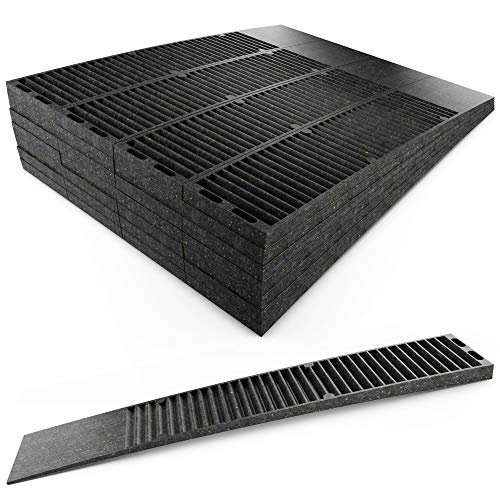
PHYXOLOGY SUPPLY Pro-Grade Composite Shims, 24 pack
Snap-off composite shims for leveling a hitting mat or subfloor on an uneven slab so your stance and lie stay true; never-rot and moisture resistant.
Simulator flooring does three jobs: it gives you a level, stable place to stand, it quiets the loud thud of impact on a slab, and it makes the bay look and feel like a real course. The one thing it does not need to do everywhere is take ball strikes, because that happens only on your hitting mat. That distinction saves real money, since you can surround an excellent mat with affordable turf instead of paying premium prices to cover an entire room in hitting-grade surface. For mats themselves, see our best golf hitting mats roundup, and for the full layout, our simulator flooring guide.
Quick comparison
| Product | Layer | Best for | Price |
|---|---|---|---|
| Heyroll Turf 7 x 15 | Surface turf | Affordable full-bay roll | $139.99 |
| LITA Deluxe Turf 7 x 15 | Surface turf | Premium, denser feel | $213.02 |
| BalanceFrom 3/4" Foam | Subfloor | Cushion and noise control | $89.99 |
| ProsourceFit 3/4" Foam | Subfloor | Sturdier cushioned base | $119.99 |
| Putt-A-Bout Par Three | Putting strip | Short-game practice | $39.99 |
| Pro-Grade Shims | Leveling | Truing an uneven slab | $18.99 |
Prices on Amazon move around, so treat these as a snapshot. Turf rolls can be cut to fit your room, and foam tile sets can be combined to cover larger bays.
The subfloor: foam tiles first
On a concrete slab, start with a foam subfloor. The BalanceFrom set lays 96 square feet of 3/4-inch interlocking EVA tiles, and the ProsourceFit weaved-pattern set is a sturdier alternative for the same coverage. Both cushion the floor, cut the loud impact thud that otherwise echoes through a basement or garage, add a little warmth, and help even out minor slab imperfections. This is the layer most beginners skip and later regret, because it is what makes hours of practice comfortable on your knees and quiet enough not to annoy the household.
The surface: turf that ties the bay together
Over the foam, roll turf across the full bay. The Heyroll 7-by-15-foot roll is an affordable way to cover a whole room in one piece, while the LITA deluxe roll is denser and more durable for a premium feel. Both can be trimmed to fit. This surround does not take ball strikes, so it does not need to be hitting-grade, it just needs to look like a course, give sure footing, and protect the floor. Drop your dedicated hitting mat into the turf where you stand, and the bay reads as one clean surface.
Leveling and putting
Two finishing pieces complete the floor. Most slabs slope slightly, so the Pro-Grade composite shims let you true up the hitting area: check it with a long level and shim from the low side until the mat sits flat, since even a small tilt changes how the club meets the ball. If you want short-game work too, the Putt-A-Bout Par Three strip sets into the surround for a more realistic roll than grainy simulator turf, so one bay covers both full swings and putting.
How we chose
We did not install this flooring in person. We compared published manufacturer specifications such as thickness, coverage area, and material, considered how each product fits into a layered simulator build, and weighed those against patterns in verified owner reviews. We focused on the role each piece plays, subfloor, surface turf, leveling, or putting, rather than ranking dissimilar products against each other, because a good simulator floor is a system of layers, not a single winner.
We deliberately separated surround turf from hitting mats, since the surround does not take ball strikes and should be chosen for cost and looks, while the mat must absorb repeated impact and belongs in its own category. Coverage and thickness figures come from manufacturers, so treat them as estimates and measure your room before ordering so you buy the right amount of turf and the right number of foam tiles.
Buying tips
Build from the slab up. Lay foam tiles first for cushion and quiet, then trim turf to cover the bay, then set a dedicated hitting mat where you swing, and shim the mat level before your first session. Measure carefully so you order enough turf to cover the floor in as few seams as possible and enough foam tiles to reach the walls. If you are flooring a basement or garage, our flooring guide covers moisture, seams, and how to handle a sloped slab in detail.
Do not cut corners on the layer your body touches most. A thin mat on bare concrete is the fastest way to sore elbows and a loud room, while foam under turf with a quality mat on top is comfortable for long sessions and kind to the floor beneath. Spend where it matters, which is cushion and a good hitting mat, and save on the surround turf that simply needs to look the part.
Golf Sim Build Planner
Room-fit worksheet, gear checklist, budget tracker, and wiring and lighting plan, in one printable planner that takes your build from idea to first swing.
Frequently Asked Questions
What is the best flooring for a golf simulator?
The best simulator floor is a layered build: a foam-tile subfloor for cushion and noise, a turf roll like the Heyroll or LITA across the surround, and a dedicated hitting mat where you actually strike the ball. The turf ties the bay together and protects the slab, while the foam underneath quiets impact and saves your joints. Your hitting mat does the heavy work, so choose a quality mat separately and surround it with turf.
Do I need foam tiles under my simulator turf?
Foam tiles are not strictly required, but they make a big difference on a concrete slab. A 3/4-inch interlocking foam base, like the BalanceFrom or ProsourceFit sets, cushions the floor, dampens the loud thud of impact that travels through a slab, and adds a little warmth underfoot. It also helps level minor imperfections. If you are flooring a basement or garage over concrete, a foam subfloor under your turf is well worth the modest cost.
How do I level a golf simulator floor on an uneven slab?
Most garage and basement slabs slope slightly for drainage, which can throw off your stance and lie. Check the hitting area with a long level, then use composite shims under the mat or subfloor to bring it true, working from the low side up. Snap-off shims like the Pro-Grade set make small adjustments easy. Aim for a level hitting surface first, since even a small tilt changes how the club meets the ball.
Should the whole room be turf or just the hitting area?
You only strike the ball on your hitting mat, so the rest of the floor does not need to be a high-end hitting surface. Most builders lay an affordable turf roll across the full bay for looks, footing, and slab protection, then drop a dedicated hitting mat into it where they stand. That gives a clean, course-like surround at a fraction of the cost of covering the whole room in premium hitting turf.
Will a hitting mat damage my floor underneath?
A good mat plus a foam subfloor protects the floor rather than harming it, but repeated impact on bare concrete can be loud and hard on your body. The bigger risk is to your joints from hitting off a thin mat on a hard slab, which is exactly why a cushioned foam base helps. Lay foam tiles, then turf, then your mat, and both your floor and your elbows will thank you over the long run.
Can I practice putting on simulator flooring too?
Yes. A roll-out putting strip like the Putt-A-Bout Par Three sits neatly in the surround so your bay doubles for short-game work between full swings. Standard simulator turf is usually a bit slow and grainy for true putting, so a dedicated putting surface gives a more realistic roll. If short game matters to you, plan a spot for a putting strip when you lay out the floor rather than adding it as an afterthought.
Building a golf sim?
Use our free calculators and guides to size the room, the gear, and the budget.
Build Planner: $39