Golf Simulator Room Size Chart
Golf simulator room size chart with minimum vs comfortable width, depth, and ceiling height for right-handed, both-handed, garage, basement, and dedicated room setups.
The short answer: a golf simulator needs roughly 10 feet of width, 12 feet of depth, and 9 feet of ceiling height as a workable minimum, and about 12 feet wide, 15 feet deep, and 10 feet high to be genuinely comfortable. Width is driven by which hands swing in the room, depth is driven by screen standoff and your launch monitor type, and ceiling height is the make-or-break dimension for a full driver swing. The chart below breaks down minimum versus comfortable targets for each handedness and space type so you can match your room before you buy gear.
Gear that fits your room
A space-friendly launch monitor, enclosure, and mat sized for a tight bay.
-
 Launch monitor SkyTrak SkyTrak Launch Monitor and Simulator
A photometric camera unit that sits beside the ball and needs far less depth than radar, the better fit for a short or shallow room.
-
 Enclosure GoSports 10 x 8 ft Golf Simulator Enclosure Net
An all-in-one bay with steel frame, blackout panels, and an HD impact screen sized for a 10 ft wide room, so it fits the workable minimum.
-
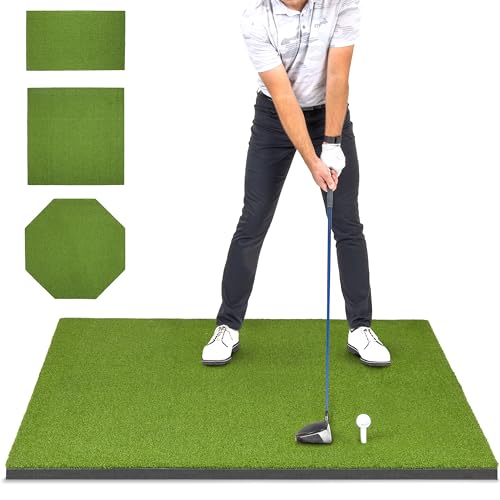 Hitting mat GoSports Elite 5'x4' Golf Hitting Mat
A full-stance turf mat with foam underlay that tucks into a tight bay without eating depth, with rubber tees included.
Prices update on Amazon and change often. As an Amazon Associate we earn from qualifying purchases at no extra cost to you.
Golf simulator room size chart
Dimensions below are general planning targets. Your own swing is the final test, especially for ceiling height. Use our golf sim room size calculator to check your exact measurements.
| Setup | Min width | Comfortable width | Min depth | Comfortable depth | Min ceiling | Comfortable ceiling |
|---|---|---|---|---|---|---|
| Right-handed only | 10 ft | 12 ft | 12 ft | 15 ft | 9 ft | 10 ft |
| Left-handed only | 10 ft | 12 ft | 12 ft | 15 ft | 9 ft | 10 ft |
| Both-handed (R and L) | 15 ft | 16 ft | 12 ft | 15 ft | 9 ft | 10 ft |
Room size by space type
The same swing needs the same room, but each space type has a typical weak point. Garages usually have the depth and width but fall short on ceiling height. Basements stay dark and stable but get cut down by ductwork and joists. A dedicated room or insulated outbuilding lets you build to the comfortable targets from the start.
| Space type | Typical width | Typical depth | Typical ceiling | Usual constraint | Verdict |
|---|---|---|---|---|---|
| Two-car garage | 18 to 20 ft | 20 ft | 8 to 9 ft | Ceiling height, door tracks | Great if ceiling clears 9 ft |
| One-car garage | 10 to 12 ft | 20 ft | 8 to 9 ft | Width and ceiling | Workable for one-handed play |
| Finished basement | 12 to 20 ft | 15 to 30 ft | 7.5 to 9 ft | Joists, beams, HVAC trunks | Excellent if you clear 9 ft in the swing zone |
| Spare room | 10 to 14 ft | 11 to 15 ft | 8 to 9 ft | Depth and ceiling | Tight but doable for one player |
| Dedicated room or outbuilding | 14 to 16 ft | 16 to 20 ft | 10 ft+ | Budget, not space | Ideal, build to comfortable targets |
Why each dimension matters
Width
Width is set by your swing arc plus safety clearance on both sides of the screen. A single right-handed or left-handed player can shift toward one side of the room and live with 10 feet. The moment you want both right-handed and left-handed golfers to play, the swing zone moves across the room, so you need clearance on both sides and the minimum jumps to about 15 feet. Always leave a foot of margin between your fully extended club and any side wall.
Depth
Depth has to cover three things: the gap between the screen and the impact point so the ball does not bounce straight back at you, the tee or mat position, and the room behind you to swing freely. Radar launch monitors that sit behind the ball, like the Garmin R10 or FlightScope Mevo+, want extra depth to track ball flight after impact, while camera-based photometric units need less. Twelve feet works, fifteen is comfortable.
Ceiling height
Ceiling height is the dimension that ends most basement and garage projects. About 9 feet is the practical minimum for a full driver swing, 10 feet is comfortable, and anything under 8.5 feet is irons-only for most golfers. Measure to the lowest obstruction in the actual swing area, not the average ceiling, and take a real swing to confirm. See our dedicated ceiling height chart for what you can swing at each height.
How to use these numbers
Treat the minimum column as the smallest room you can build in without clipping a wall or ceiling, and the comfortable column as the target if you have a choice. Measure your space first, take real swings with your longest club, then match the result to the chart. For a full walkthrough of layout, standoff, and safety margins, read our golf sim room size guide, and run your exact numbers through the room size calculator before buying a screen, mat, or enclosure.
Golf Sim Build Planner
Room-fit worksheet, gear checklist, budget tracker, and wiring and lighting plan, in one printable planner that takes your build from idea to first swing.
Frequently Asked Questions
What is the minimum room size for a golf simulator?
A workable minimum is about 10 feet wide, 12 feet deep, and 9 feet high for a single right-handed or left-handed player. That gives just enough room to swing, place a hitting mat and screen, and stand back from the impact surface. It is tight, and tall players or anyone with a long, flat swing should add a foot in every direction. For comfort and resale flexibility, aim for 12 wide, 15 deep, and 10 high.
How much width does a both-handed setup need?
If both right-handed and left-handed golfers will use the space, plan for at least 15 feet of width, and ideally 16 feet. A single-handed player can center themselves toward one side, but switching hands moves the swing zone across the room. You need clearance on both sides of the screen so neither player clips a side wall on the backswing or follow-through. When in doubt, measure your widest swing arc and add two feet of safety margin.
Is a garage big enough for a golf simulator?
Many two-car garages work well because they are wide and deep, but ceiling height is the usual problem. A lot of garages sit at 8 to 8.5 feet, which is irons-only territory for most golfers. Measure floor to the lowest obstruction, including garage door tracks and opener rails, before committing. If the ceiling clears 9 feet and you have 12 feet of depth, a garage can make an excellent dedicated or convertible simulator bay.
How deep does the room need to be?
Depth covers the screen standoff, the tee or mat position, and the space behind you to swing and to place a radar launch monitor if you use one. Twelve feet is a workable minimum, but 15 feet is far more comfortable and is close to required if you use a rear-facing radar unit that needs room to track the ball after impact. Camera-based photometric monitors need less depth than radar units.
Can I build a simulator in a basement?
Basements are popular because they stay dark and temperature-stable, but ceiling height and ductwork are the constraints. Finished basements often sit near 8 feet, and exposed joists, beams, and HVAC trunks can steal the inches that matter most at the top of your swing. Measure to the lowest obstruction in the swing zone, not just the average ceiling. If you clear 9 feet there, a basement is one of the best places to build.
How do I confirm my own room will work?
Measure width, depth, and the lowest ceiling obstruction in the swing area, then take a few real swings with your driver while watching the clubhead at the top. The chart gives general targets, but body height, swing plane, and arm length vary, so your own swing is the final test. Our room size calculator turns your measurements into a clear go or no-go and suggests what space type fits best.
Building a golf sim?
Use our free calculators and guides to size the room, the gear, and the budget.
Build Planner: $39